
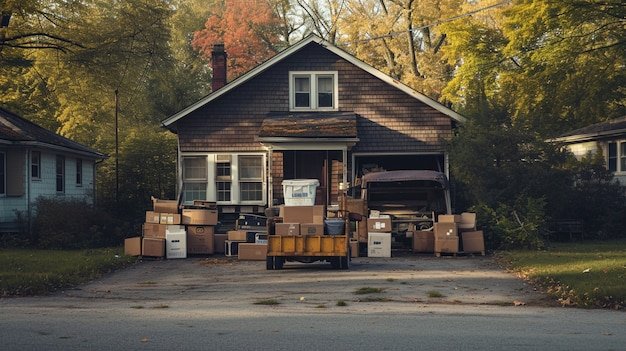
Where Your Belongings Go After a House Clearance
- February 27, 2026
- House & Residential Property Clearance
- 8 mins read
The Journey of Your Belongings
When it comes time to clear out a house, whether it’s your own or that of a loved one, you might wonder what actually happens to all the belongings that are removed. It’s a fair question, and one that touches on sustainability and how we manage our possessions. This article will walk you through the typical journey of items after a house clearance, from the initial sorting to their final destination, giving you a clearer picture of the process and its impact. Key Takeaways
• House clearance involves a structured process starting with an assessment, followed by sorting items into categories like donation, recycling, resale, or disposal.
• Many items from a house clearance can find a new life through donations to charities or community groups, benefiting those in need.
• Recycling plays a significant role, with materials like metal, glass, and plastic being processed to reduce landfill waste and conserve resources.
• Resale offers a way to recoup some value from pre-owned items through auctions or online platforms, giving them a second chance. • Responsible disposal is the final step for items that cannot be reused, recycled, or sold, with professionals ensuring waste is handled legally and ethically.
Understanding the House Clearance Process
Embarking on a house clearance can feel like a significant undertaking, but understanding the process itself is the first step towards a smoother experience. It’s more than just removing unwanted items; it’s a structured approach to managing your belongings and preparing a property for its next phase. Whether you’re downsizing, preparing a home for sale, or managing the estate of a loved one, a clear grasp of the procedure can alleviate stress and ensure efficiency.
Initial Sorting and Assessment
Before any items are moved, a thorough initial assessment is paramount. This involves a careful evaluation of the property’s contents. Professionals will survey the items present, noting their condition, type, and potential value. This isn’t just a quick glance; it’s a detailed inventory that helps determine the best course of action for each item. Think of it as creating a roadmap for the entire clearance. This assessment helps identify:
• Items that are clearly rubbish and need disposal.
• Belongings that could be donated to charities or community groups. • Items that hold resale value, such as furniture, antiques, or collectibles. • Anything that requires special handling, like hazardous materials.
This initial stage is where decisions begin to form, setting the foundation for responsible and efficient removal. It’s about understanding what you have before deciding what to do with it.
The Role of House Clearance Companies
Engaging a professional house clearance company brings a level of expertise and efficiency that is hard to match with a DIY approach. These companies are equipped to handle the physical labour, the logistics of transportation, and the complexities of responsible disposal. They understand the regulations surrounding waste removal and have established channels for donation and recycling. Their experience means they can often complete a clearance much faster and more effectively than individuals. They also provide a crucial service by offering support during what can be an emotionally charged time, handling the practicalities with sensitivity and professionalism. When you consider the time, effort, and potential disposal fees involved in a DIY clearance, the value of professional services becomes quite clear, especially for larger or more complex jobs.
Where Do Your Belongings Go? A Multi-faceted Journey
Once a house clearance is complete, the items removed embark on a journey. It’s not a simple case of everything ending up in one place. Instead, depending on the item’s condition and nature, it can follow several different paths. Understanding these destinations can offer peace of mind and highlight the importance of choosing a responsible clearance service.
Donation: Giving Items a Second Life
Many items, particularly furniture, clothing, and household goods that are still in good condition, can be given a new purpose. Charities and community organisations are often in need of these items. Think about a perfectly good armchair that might be too large for your current needs; it could provide comfort in a local community centre’s waiting room or a hospital ward.
Similarly, books can find new readers in libraries or schools, and kitchenware can help someone setting up a new home. This is often the most rewarding outcome, as it directly benefits others and keeps useful items out of landfill.
Recycling: Environmental Responsibility
Not everything can be reused, but that doesn’t mean it’s destined for the tip. A significant portion of household items are recyclable. Metals, glass, plastics, and paper products can all be processed and transformed into new materials. Responsible clearance companies will sort these materials and ensure they are sent to the appropriate recycling facilities. This process is vital for conserving natural resources and reducing the energy required to produce new goods. It’s a practical way to minimise environmental impact.
Resale: Finding Value in Pre-owned Items
Some items possess a value that can be realised through sale. This could range from antique furniture and collectibles to designer clothing or even well-maintained electronics. Clearance professionals can identify these
items and facilitate their sale through various channels. This might involve auctions, consignment shops, or online marketplaces. Selling items not only prevents them from being discarded but can also recoup some of the costs associated with the clearance itself. It’s about recognising the inherent worth that pre-owned items can still hold.
Disposal: The Last Resort
Unfortunately, some items are beyond repair, reuse, or recycling. These might be broken appliances, heavily damaged furniture, or general waste. In such cases, responsible disposal is the only option. This means ensuring that items are taken to licensed waste management facilities where they are handled according to environmental regulations. The goal is always to minimise the amount of waste sent to landfill, but for certain items, this is the unavoidable final step in their journey.
Special Considerations for Certain Items
When undertaking a house clearance, not everything fits neatly into the categories of donation, recycling, or general disposal. Certain items require a more specialised approach due to their nature, potential risks, or inherent value. It’s important to be aware of these distinctions to ensure a safe, legal, and financially sound clearance process.
Hazardous Materials and Waste
Handling items that could be harmful to people or the environment demands particular care. This category includes things like old paints, cleaning chemicals, batteries, fluorescent light bulbs, and electronic waste (e-waste). Improper disposal of these materials can lead to soil and water contamination, and in some cases, pose immediate health risks.
• Always identify and segregate hazardous items from general waste. • Research your local council’s guidelines for disposing of hazardous waste. Many councils have specific collection points or scheduled days for these items.
• Reputable house clearance companies will have protocols for safely handling and disposing of hazardous materials, often working with licensed waste management facilities.
Never attempt to dispose of hazardous materials in your regular household bins or down drains. This can have serious environmental consequences and may incur significant fines.
Valuable Antiques and Collectibles
On the other end of the spectrum are items that may hold considerable monetary or sentimental worth. These could range from antique furniture and artwork to rare books, jewellery, or vintage toys. It’s easy to overlook the potential value of such items if you’re not familiar with the market.
• Take the time to identify potential valuables before the clearance begins. Look for maker’s marks, hallmarks, or signs of age and craftsmanship.
• Consider obtaining professional appraisals for items you suspect might be valuable. Experts can provide an accurate assessment of their current market worth.
• Decide whether you wish to sell these items yourself, consign them to an auction house, or sell them through a specialist dealer. Each option has its own process and potential returns.
Understanding the specific requirements for handling these items ensures that their value is recognised and that they are managed appropriately, whether that means preserving them for future generations or realising their financial potential.
The Environmental and Social Impact of Responsible Clearance
When you engage in a house clearance, you’re not just tidying up a space; you’re participating in a process with significant environmental and social implications. Choosing a responsible clearance service means your belongings embark on a journey that prioritises sustainability and community benefit, rather than simply ending up in landfill.
Responsible clearance diverts a substantial amount of waste from landfills. This is achieved through a multi-pronged approach. Firstly, items in good condition are identified for donation. These can range from furniture and clothing to books and kitchenware, finding new homes with charities, community centres, or individuals in need. This act of giving not only supports those less fortunate but also reduces the demand for new manufactured goods, conserving resources and energy.
Secondly, materials that cannot be reused are directed towards recycling. Metals, plastics, glass, and paper are separated and processed, transforming them into new products. This significantly lowers greenhouse gas emissions
compared to producing items from raw materials. Even certain electrical items, which can contain hazardous components, are handled according to strict regulations (like WEEE) to ensure they are recycled safely and effectively.
Here’s a look at the typical breakdown of where items might go:
• Donation: 40-60% of cleared items (depending on condition and type) • Recycling: 30-50% of cleared items (metals, plastics, paper, glass, electronics)
• Resale: 5-15% of cleared items (antiques, collectibles, high-value goods)
• Disposal: 0-10% of cleared items (unusable, non-recyclable waste)
Beyond the environmental benefits, responsible clearance also has a positive social impact. By supporting charities and community organisations through donations, you contribute to their ability to provide services and support to those who need it most. It’s about making conscious choices that benefit both the planet and people.
The careful sorting and redirection of items after a house clearance is more than just waste management; it’s an opportunity to contribute positively to the environment and support community initiatives. It transforms a potentially overwhelming task into a chance for renewal and giving back.
The Ongoing Journey of Your Belongings
So, as you can see, clearing out a house isn’t just about making things disappear. It’s a whole process where items get a second chance, whether that’s by being reused by someone else, recycled into new materials, or disposed of in a way that’s kinder to the planet. Responsible clearance companies really do try to make sure things go to the right place. It’s good to know that your old belongings can still be useful or at least handled with care,
rather than just ending up in a landfill. It gives you a bit of peace of mind, doesn’t it?